Pixel Drip: How Gaming's Visual DNA Quietly Rewired What Americans Actually Wear
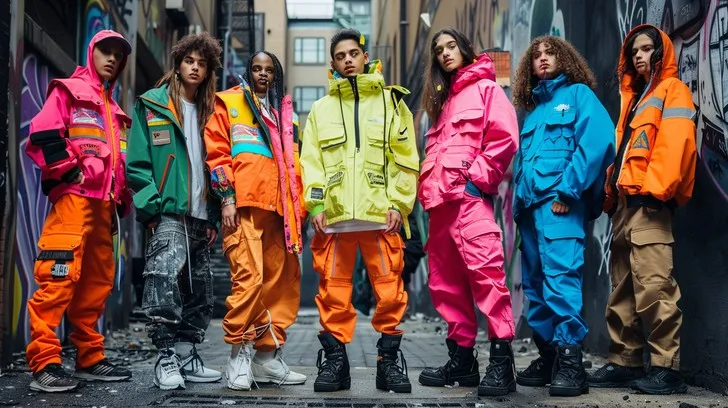
Photo: colorful neon streetwear fashion young adults urban style bold graphics, via images.stockcake.com
The Fit Check You Didn't See Coming
Somewhere between 2015 and now, something shifted in the visual grammar of how Americans dress. It's hard to pinpoint exactly when, which is partly what makes it interesting. There was no single cultural moment, no one collection or campaign that flipped the switch. It was gradual, then sudden — like a trend bar filling up until the transformation just triggered.
The neon color palettes that used to live exclusively on HUD displays and health bars are now hanging on racks at Target. The oversized, geometry-heavy silhouettes that defined early 3D game character design are all over luxury streetwear. The maximalist, layer-everything, contrast-everything aesthetic that gaming culture has always embraced has quietly become the dominant visual mode for an enormous swath of American fashion.
This isn't about cosplay. It's not about gamers wearing gamer merch. It's about something much larger: the visual DNA of gaming culture permeating mainstream fashion so thoroughly that most people wearing it couldn't tell you where it came from.
Tracing the Origin Point
To understand how we got here, you have to go back to the convergence of several forces that were all pulling in the same direction at once.
Streaming culture was the first major catalyst. When Twitch and then YouTube Gaming created a new class of cultural celebrities — people who performed for cameras in their bedrooms for millions of viewers — it created a novel aesthetic context. These creators needed to look interesting on camera without traditional wardrobe budgets or styling teams. The solutions they landed on organically: bold colors that read well on screen, graphic-heavy pieces that communicated personality instantly, layered looks that created visual interest in a static frame. That aesthetic, repeated across thousands of streamers' channels for years, imprinted on enormous audiences.
The second catalyst was the rise of Harajuku and Korean streetwear as reference points for American youth fashion, both of which had their own deep overlaps with gaming aesthetics. When those influences started flowing into American retail through fast fashion and then into premium brands, they carried gaming-adjacent visual codes with them.
The third — and maybe most underrated — was anime's full mainstream breakthrough. For years, anime fandom and gaming fandom were deeply intertwined subcultures with significant aesthetic overlap: the same comfort with maximalism, the same love of bold graphic elements, the same willingness to treat clothing as expressive rather than merely functional. When anime went mainstream (and it absolutely did — Demon Slayer grossed more than Tenet in its theatrical run), it brought that whole aesthetic vocabulary with it.
The Luxury Co-Sign
Nothing accelerates a subcultural aesthetic's mainstream adoption faster than luxury fashion putting its stamp on it. And gaming has been getting that stamp for years now.
Louis Vuitton's collaboration with League of Legends in 2019 wasn't just a licensing deal — it was a signal. One of the oldest luxury houses in the world was treating gaming's visual world as legitimate design inspiration, not just a marketing opportunity. The skins they created for the game and the real-world collection that accompanied them blurred the line between digital fashion and physical fashion in ways that felt genuinely new.
That was followed by a wave of similar collaborations: Gucci with The North Face and various gaming IP, Balenciaga's Fortnite partnership (which, remarkably, included in-game items and real-world clothing simultaneously), and countless streetwear brands — Off-White, Supreme, Palace — incorporating visual languages that owe obvious debts to game UI design, pixel art, and the kind of maximalist graphic work that's been standard in gaming culture for decades.
The luxury co-sign matters because it reshapes perception. Once high fashion treats an aesthetic as legitimate, it accelerates adoption across every tier of the market — from mass retail to workwear to what people throw on for a grocery run.
What the Aesthetic Actually Is
It's worth being specific about what "gaming aesthetics in fashion" actually means, because it's not just neon and controller prints.
The deeper influence is structural. Gaming culture has always been comfortable with visual maximalism — the idea that more is more, that contrast is good, that you can layer references and influences without needing them to cohere into a single clean statement. That's a fundamentally different relationship with visual communication than the minimalism that dominated American fashion in the 2010s.
It also shows up in the relationship with color. Gaming visuals, particularly from the 16-bit era through current high-saturation game engines, use color to communicate information and emotion simultaneously and boldly. That bleeds into a fashion sensibility that treats color as expressive rather than decorative — not "what goes together" but "what communicates."
The silhouette shift matters too. Gaming character design, particularly in Japanese RPGs and fighting games that have been huge cultural reference points, has never been beholden to realistic human proportions. Oversized shoulders, exaggerated proportions, asymmetrical details — these are normal in game character design and have become increasingly normal in the streetwear and youth fashion that gaming-adjacent culture has influenced.
Corporate Dress Codes Didn't Get the Memo (Or Did They?)
Here's where it gets genuinely weird: the gaming aesthetic's influence isn't staying in youth streetwear. It's creeping into professional contexts in ways that would have seemed absurd a decade ago.
The pandemic-era collapse of formal office dress codes opened a door that hasn't closed. As companies — particularly in tech, media, and creative industries — stopped enforcing traditional professional dress, the vacuum got filled by whatever people actually wanted to wear. And for a generation raised on gaming aesthetics, that meant bolder colors, graphic elements, and silhouettes that would never have cleared the old professional dress bar.
Walk through any major tech company campus, any mid-sized creative agency, any startup office today and you'll see it: the visual sensibilities that used to be confined to conventions and gaming setups are now sitting in conference rooms and client presentations. Not in an obvious, costume-y way — subtly, in color choices and graphic elements and the general comfort with visual expression that gaming culture normalized.
What It Means When Pixels Become a Uniform
There's a cultural argument to be made here that goes beyond fashion trend analysis.
When a visual language that developed inside a subculture becomes mainstream, it changes the relationship between that subculture and the broader culture. Gaming aesthetics going mainstream is partly a triumph — validation that the visual creativity of gaming culture was genuinely compelling, not just niche. It's also, inevitably, a dilution. The more gaming's visual language gets absorbed into mass market fashion, the less it functions as a marker of belonging to a specific community.
For the people who grew up in that community — who wore gaming-adjacent aesthetics when it marked them as weird, when it was actively exclusionary in professional and social contexts — that's a complicated feeling. Victory and loss, simultaneously.
But that's what happens when a visual language wins. It stops belonging to the people who invented it and starts belonging to everyone.
And everyone, it turns out, wanted to look like they'd been playing games all along.