Your Boss Learned It From Discord: How Gaming Communities Are Rewriting the Remote Work Playbook
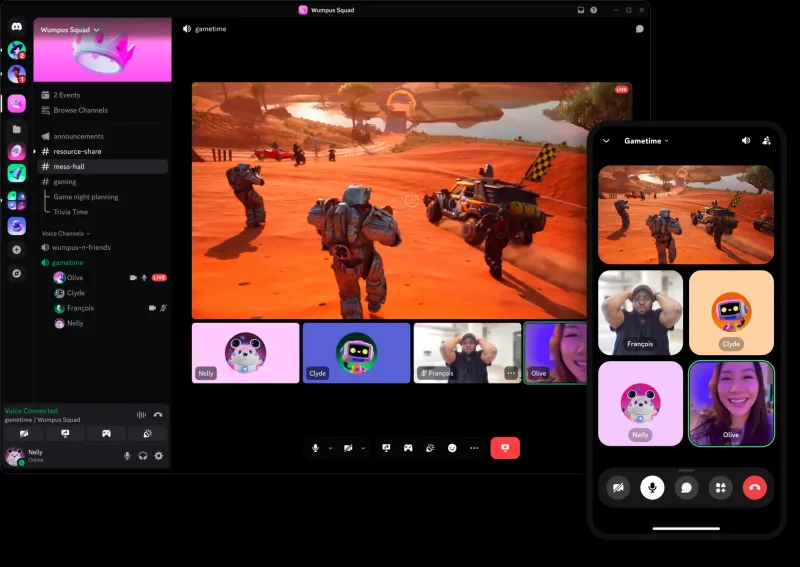
Photo: Discord gaming community remote work team collaboration, via cdn.prod.website-files.com
Somewhere in a conference room in Midtown Manhattan, a team of highly paid organizational consultants is pitching a "revolutionary" new framework for remote team communication. They've got slides. They've got buzzwords. They've got a day rate that would make your eyes water.
And somewhere in a basement in Ohio, a 22-year-old server admin is running a 4,000-person gaming community with zero budget, zero formal training, and a response time that most corporate IT departments would kill for.
The gap between those two rooms is closing fast — and it's closing in one direction.
The Original Remote Office Was a Game Server
Let's rewind a little. Long before the pandemic forced companies to figure out how to keep teams connected across living rooms and kitchen tables, gamers had already solved that problem. Discord, which launched in 2015, wasn't built for enterprise. It was built so that people playing League of Legends and Destiny could talk to each other without lag and without the chaos of older platforms like Ventrilo or TeamSpeak.
What nobody expected was that the communities built on Discord would quietly develop some of the most sophisticated informal organizational structures on the internet.
Roles, permissions, dedicated channels for specific topics, pinned announcements, bots that automate repetitive tasks, tiered access based on trust and tenure — sound familiar? It should. That's basically the architecture of a modern remote workplace. Gamers just built it first because they had to.
Role Hierarchies That Actually Make Sense
One of the most underrated innovations of the Discord era is the role-based hierarchy system. In a well-run gaming server, every member knows exactly where they stand. Newcomers get a basic role with limited access. They earn trust over time — by showing up, contributing, not being a nightmare to deal with — and gradually unlock more channels, more responsibilities, more voice in how the community runs.
That's not just good community management. That's a functional onboarding and career progression system.
Compare that to the average corporate onboarding experience: a stack of PDFs, a 90-minute Zoom orientation, and then three weeks of figuring out who to actually ask when you have a question. Gaming communities have been doing structured onboarding better than most HR departments for years, and they did it without a single LinkedIn Learning course.
Companies like GitLab and Zapier — both fully remote outfits that have been cited as models for async work — use permission-based access and role clarity that maps almost perfectly onto what Discord server admins have been doing since the Obama administration.
Async Is Not a Compromise — It's a Feature
Here's a mindset shift that took corporate America way too long to absorb: not every conversation needs to happen in real time. Gamers figured this out early. When you're coordinating a raid across six time zones, you can't expect everyone to be online simultaneously. You post the plan, you pin the important stuff, you trust that people will catch up.
Asynchronous communication in gaming communities isn't a workaround — it's the default. And it produces something that endless back-to-back Zoom calls never will: a written record that everyone can reference, revisit, and build on.
Forward-thinking companies are finally catching on. The concept of "async-first" work culture — where written communication is the primary mode and synchronous meetings are treated as exceptions rather than defaults — is gaining serious traction in tech and beyond. But gamers weren't reading thought leadership pieces about it. They were just running their servers.
The Moderation Problem Is Actually a Management Problem
Ask any Discord server admin what the hardest part of the job is, and they'll tell you the same thing: people. Not the bots, not the permissions, not the channel architecture. People. Managing conflict, setting and enforcing community norms, handling bad actors without blowing up the whole group dynamic — that's the real work.
Sound like anything a middle manager deals with?
The best gaming community moderators have developed a kind of informal expertise in conflict resolution, norm-setting, and community health that genuinely rivals what you'd find in a formal management training program. They've learned that rules need to be clear and consistently enforced. They've learned that transparency builds trust. They've learned that a toxic power user who drives engagement can still poison the whole environment if you let them stick around too long.
These aren't gaming lessons. They're leadership lessons. The classroom just happened to have a controller in it.
Fortune 500 Companies Are Paying Attention
This isn't all theoretical. Major companies have started building internal communication structures that look remarkably like well-organized Discord servers. Microsoft Teams added channel-based organization and role permissions. Slack has been refining its own hierarchy tools for years. Some companies have even started using Discord itself for internal communication — particularly in industries where the workforce skews younger.
More interestingly, some HR and organizational design consultants have started studying gaming communities explicitly. Not as a curiosity, but as a model. The spontaneous, self-organizing nature of a healthy Discord server — where people find their roles, contribute based on genuine interest, and build real loyalty to the community — is exactly what most corporate culture initiatives are desperately trying to manufacture.
The difference is that in gaming communities, nobody forced it. It emerged because the structure served the people in it. That's a lesson that no amount of mandatory team-building retreats can replicate.
What Corporate Culture Can Actually Steal
So what's the practical takeaway here? A few things stand out:
Clear roles with real meaning. Not job titles that exist for org chart purposes, but functional roles that tell everyone — including the person holding them — what they're actually responsible for.
Dedicated spaces for different kinds of conversation. Not every discussion needs to happen in the same channel. Separating announcements from casual chat from project-specific coordination isn't just good Discord hygiene — it's good communication design.
Community health as a metric. Gaming server admins track engagement, watch for early signs of toxicity, and actively tend to the culture. Most companies measure employee satisfaction once a year with a survey. The gap there is enormous.
Earned trust over assumed hierarchy. The idea that influence and access should be earned through demonstrated contribution rather than just assigned by org chart is something gaming communities have baked into their DNA.
The Gamers Were Right
There's a certain irony in watching corporate America slowly reinvent structures that a generation of gamers built for fun, in their spare time, without compensation. But here we are.
The Discord effect is real. The organizational instincts that developed inside gaming communities — out of necessity, out of passion, out of sheer trial and error — are proving to be more durable and more human than a lot of what traditional management theory produced.
Your boss might not know it yet, but somewhere along the line, a 19-year-old moderating a Final Fantasy XIV fan server probably figured out a better way to run a meeting. And eventually, even the consultants are going to have to admit it.