Level Up Your Social Life: How Gaming Is Quietly Taking Over College Campuses
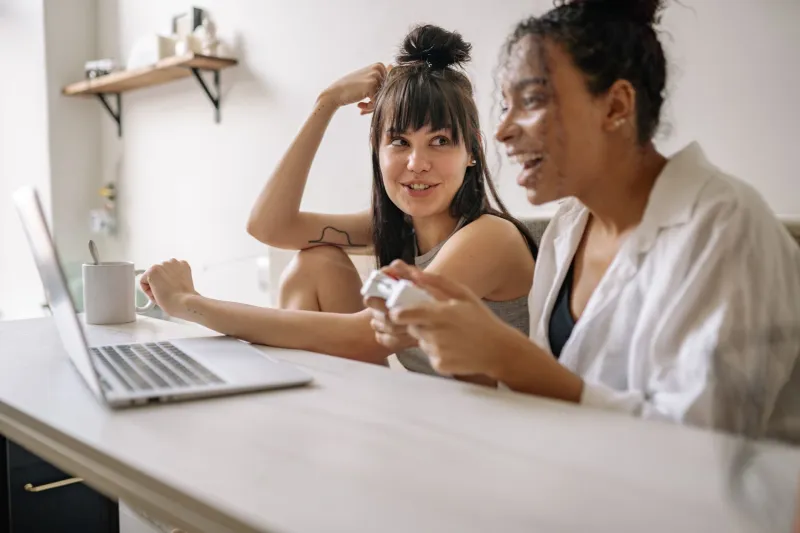
There's a scene playing out in residence halls from UCLA to Ohio State that would've seemed pretty weird a decade ago. Two students who barely exchanged words during their first week of move-in are now inseparable — not because they bonded over dining hall food or a shared class, but because they both play Final Fantasy XIV and ended up in the same Free Company guild online before they ever had a real-life conversation.
This isn't a fluke. It's a pattern. And it's reshaping what college social life actually looks like in 2024.
Raids Before Ragers
Ask Marcus, a sophomore computer science major at the University of Michigan, how he made his closest friends freshman year, and he doesn't hesitate. "Discord, 100%," he says. "My roommate and I barely talked. But I joined a League of Legends server for incoming freshmen and met like eight people I still hang out with every single weekend."
Marcus's story is becoming the norm rather than the exception. A 2023 survey from the Higher Education Research Institute found that nearly 40% of college freshmen reported gaming communities — either online or campus-based — as a primary way they formed early social connections. That number has climbed steadily over the past five years, and campus administrators are starting to pay attention.
For a lot of students, especially those who don't drink, don't vibe with Greek life, or just find the chaos of traditional dorm programming kind of exhausting, gaming offers something rare: a structured social environment with built-in purpose. You're not just standing around trying to think of something to say. You're completing objectives together. You're communicating, strategizing, and — maybe most importantly — showing up consistently.
"There's accountability in a raid group that you just don't get at a party," says Priya, a junior at UT Austin who leads a World of Warcraft guild that includes about 30 students from her campus. "People know your username. They know if you ghosted last Tuesday's run. That kind of social pressure actually builds real relationships."
The RA Perspective
Resident advisors — the students tasked with building community in the dorms — have had a front-row seat to this shift, and their takes are surprisingly nuanced.
Jordan, an RA at a mid-sized state school in the Midwest who asked that their school not be named, told us that the job has changed dramatically even in the three years they've been doing it. "When I was a freshman, you'd prop your door open and people would wander in. That still happens, but less. Now I'll have a floor where half the residents are in the same Valorant squad and they're already tight before I've even done my first floor meeting."
Jordan says this creates an interesting challenge. Gaming friend groups can be incredibly tight-knit, which is great for the individuals involved — but it can also mean those students are less likely to branch out or engage with campus programming. "I've had residents who are totally thriving socially, but I've never seen them at a single floor event. They're fine, honestly. But it does make my job feel kind of irrelevant sometimes."
Not every RA sees it as a problem, though. Some have started leaning into gaming culture directly, organizing Mario Kart tournaments, Among Us nights, and even tabletop RPG sessions as official floor activities. The ones who do report significantly higher engagement than traditional movie nights or study breaks.
What the Research Says
Dr. Carla Mendes, a social psychologist at a research university in the Northeast who studies digital community formation in young adults, says the data supports what students are experiencing anecdotally.
"Gaming communities offer something that's genuinely hard to replicate in other college social contexts: consistent, low-stakes interaction over time," she explains. "You log on, you play, you talk. You do that fifty times with the same people and suddenly you have a real friendship. The structure removes a lot of the social anxiety that traditional settings can create."
Mendes's research also touches on mental health outcomes, and here the picture gets interesting. Students who reported strong gaming-based social networks showed comparable or better mental health indicators than those with primarily in-person social networks — with one notable caveat. "The students who struggled were the ones whose only social connection was online," she notes. "Gaming communities work best as a bridge, not a replacement. The healthiest students were using them to find their people and then spending real time with those people too."
Greek Life Feels the Pressure
If there's one corner of campus culture that's feeling the gaming wave most acutely, it might be Greek life. Fraternities and sororities have long served as the dominant social infrastructure on American campuses, offering belonging, networking, and a ready-made social calendar. But their numbers have been declining at many schools, and gaming culture is part of the reason why.
"Why would I pay thousands of dollars in dues to maybe find my people when I can join a Discord server for free and definitely find my people?" asks Devon, a freshman at a large Southern university who considered rushing but ultimately decided against it. "The gaming community I'm in does events, hangs out IRL, supports each other. It's basically a fraternity without the hazing and the fees."
To be fair, plenty of students do both. Gaming and Greek life aren't mutually exclusive, and some fraternities and sororities have actively started incorporating gaming into their recruitment and social programming. But the competitive dynamic is real, and student affairs offices are watching enrollment numbers closely.
Yes, People Are Dating Through This Too
Because of course they are. The same closeness that makes gaming communities great for platonic friendships also creates the conditions for romantic ones. Multiple students we spoke with mentioned meeting significant others through gaming groups, and it tracks — you spend hours communicating, problem-solving, and sharing wins and losses with someone, and sometimes feelings develop.
"It's kind of the perfect setup, honestly," laughs Priya. "You already know if you're compatible before you even go on a date. You've seen how they handle stress, how they treat teammates, whether they rage quit. That tells you a lot about a person."
The Bigger Picture
What's happening on college campuses right now is a microcosm of something bigger — a genuine cultural negotiation between digital and physical social life. Gaming communities aren't replacing real human connection. They're changing the path to it, offering a new on-ramp that works better for a lot of people than the traditional options ever did.
For a generation that grew up online, building friendships through a headset and a shared quest doesn't feel like a consolation prize. It feels completely natural. And for many of them, those Discord friendships are the ones that are going to last well beyond graduation.
The dorm room door might be closed. But the Discord server? That's always open.