Where Pixels Meet People: Why Anime Cons Have Become Gaming's Most Important Social Scene
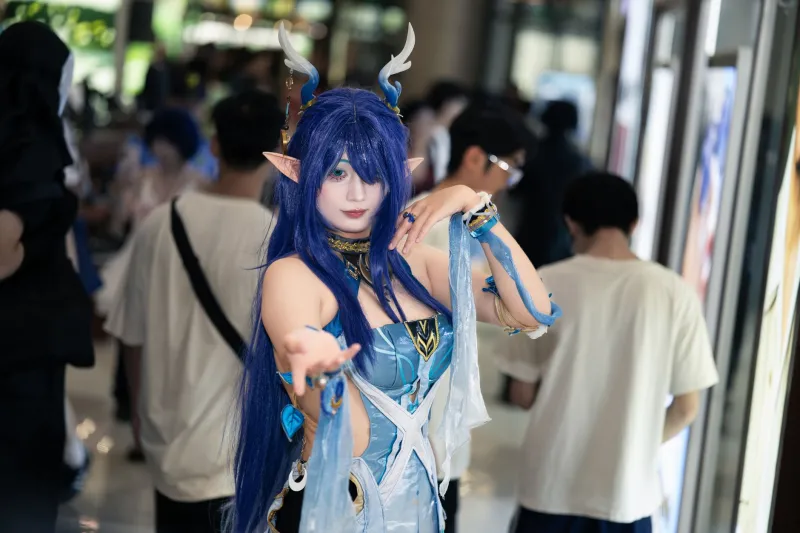
There's a moment that happens at nearly every anime convention in America. Two strangers lock eyes across a crowded exhibition hall, one dressed as a character from Final Fantasy XIV, the other wearing a hand-stitched costume from Genshin Impact. Without saying a word, they already know they have something to talk about for the next four hours. That's the magic of the modern anime con — and it's reshaping how gaming communities actually function in the real world.
What started as niche gatherings for hardcore anime fans has quietly transformed into something much bigger. Today, events like Anime Expo in Los Angeles, Otakon in Washington D.C., and hundreds of smaller regional conventions scattered across the country have become the primary physical spaces where online gaming communities finally meet face-to-face. The convention floor is no longer just about panels and merch. It's a social infrastructure.
From Usernames to Handshakes
Ask anyone who's been attending cons for more than a few years, and they'll tell you the vibe has shifted dramatically. Marcus, a 26-year-old from Atlanta who's attended Dragon Con every year since 2018, puts it plainly: "I have friends I've been raiding with in World of Warcraft for three years. We finally met at Dragon Con last fall. It felt less like meeting a stranger and more like seeing someone I already knew."
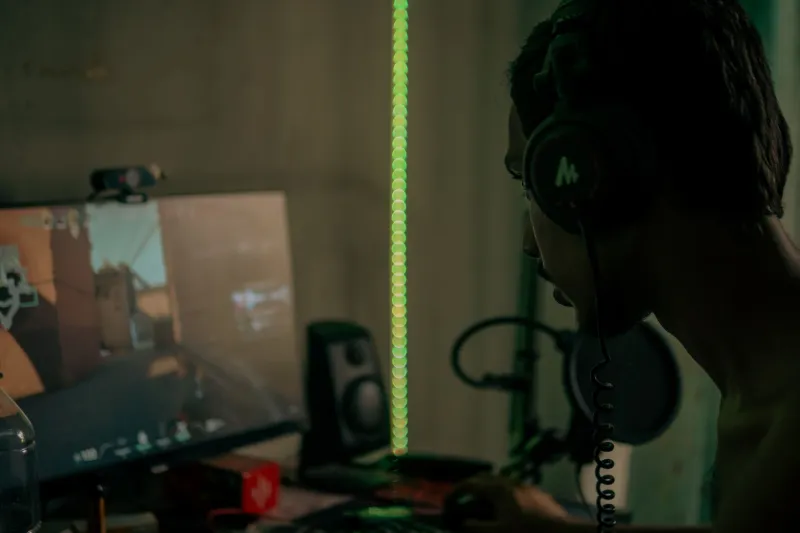
That sentiment is incredibly common. Online gaming communities — whether they're built around competitive Valorant teams, cozy Stardew Valley Discord servers, or massive MMO guilds — have a built-in intimacy that doesn't always translate to physical meetups. Conventions solve that problem elegantly. The shared environment, the costumes, the panels, and the general organized chaos of a con weekend create a low-pressure social container that makes it easy to finally close the gap between avatar and person.
For a lot of gamers in their twenties, conventions have become the de facto answer to a question that digital spaces can't quite resolve: how do you actually hang out?
Cosplay as a Social Currency
Here's something worth paying attention to: cosplay has become one of the most powerful social tools in gaming culture, and conventions are where that currency gets spent.
Wearing a well-executed cosplay of a beloved gaming character isn't just about creativity or craftsmanship. It's a signal. It tells every other person in that convention center exactly what you're into, what communities you belong to, and what conversations you're open to having. In a world where most social interaction happens through screens, that kind of instant, visible self-expression is genuinely rare.
Jessica, a 23-year-old cosplayer from Phoenix who specializes in Elden Ring builds, describes it this way: "When I wear my Malenia cosplay, I don't have to introduce myself or explain what I'm into. People just come up to me. Some of them end up being the most genuine friends I've made as an adult."
That's not a small thing. The research on adult friendship consistently shows that proximity and repeated exposure are the two biggest drivers of connection — exactly what conventions manufacture artificially for a weekend. Add cosplay as a conversation accelerant, and you've got a social environment that's almost engineered for community-building.
The Status Game Nobody Talks About
Let's be real about something the gaming community doesn't always acknowledge out loud: convention attendance has become a marker of social standing in certain circles.
Showing up to Anime Expo or PAX East isn't just about having a good time anymore. For a significant segment of gaming culture — especially among streamers, content creators, and community organizers — being present at the right events is part of how credibility gets built. The photos, the meetups, the panels you attended or spoke on — all of it feeds back into an online presence that reinforces your position in a given community.
This isn't necessarily cynical. Social capital has always worked this way. But it's worth naming, especially as conventions have grown into legitimate networking environments. Independent game developers pitch to publishers in hotel lobbies. Twitch streamers coordinate collaborations over overpriced convention center coffee. Fan artists build professional relationships with studios through chance encounters at booths.
The convention circuit, in other words, functions a lot like industry conferences do in other fields — except with significantly better costumes and a much higher probability of someone handing you a hand-painted fan art print of your favorite character.
Romance, Friendship, and the Con Floor
It would be strange to write about conventions as social spaces without acknowledging what a lot of attendees are quietly hoping for: connection that goes beyond gaming talk.
The data on this is anecdotal but persistent. Ask around in any gaming community and you'll find a surprising number of people who met their current partner, closest friend, or most meaningful collaborator at a convention. There's something about the intensity of a con weekend — the shared exhaustion, the high-stakes cosplay reveals, the 2 a.m. conversations in hotel hallways — that accelerates emotional intimacy in a way that online interaction rarely does.
Derek and Priya, a couple from Chicago who met at C2E2 in 2021, both credit the convention environment with making their connection possible. "We'd both been in the same Fire Emblem Discord for months and never really talked," Derek explains. "At the con, we ended up in the same panel, both in FE cosplays, and that was it. The convention gave us a reason to actually exist in the same space."
That phrase — exist in the same space — captures something essential about why conventions have become so central to gaming culture's social life. Digital communities are real, but they're weightless in a specific way. Conventions add gravity.
The Smaller Cons Might Matter Most
Anime Expo draws over 100,000 attendees. PAX conventions fill enormous convention centers across multiple cities. But some of the most meaningful community-building in gaming culture is happening at events you've probably never heard of.
Regional cons — the ones running out of mid-sized hotel ballrooms in cities like Columbus, Albuquerque, or Richmond — operate at a scale that actually facilitates intimacy. Everybody knows everybody. The same faces show up year after year. The community density is higher, and the barrier to genuine connection is lower.
For a lot of gamers, the local con is where their social world is actually centered. It's their annual reunion, their networking event, and their creative showcase all rolled into one chaotic, deeply personal weekend.
The IRL Layer Gaming Culture Needed
Gaming has always been a social activity, even when it looked like a solitary one. The stereotype of the isolated gamer has been thoroughly dismantled over the past decade — by streaming culture, by massive multiplayer communities, by the sheer visibility of gaming as a mainstream hobby.
But conventions represent something specific and irreplaceable: the physical layer that digital culture has always needed. They're proof that the connections formed through shared virtual experiences are real enough to survive contact with the actual world.
For a generation that grew up socializing through screens, that might be the most significant thing happening on any convention floor — more significant than any panel, any celebrity appearance, or any limited-edition merch drop. The real event is the one where usernames become people, and online communities remember that they were always, underneath it all, made of humans.
And honestly? That's worth showing up for.