Gatekeeping Is Over: How Women Took Gaming and Never Gave It Back
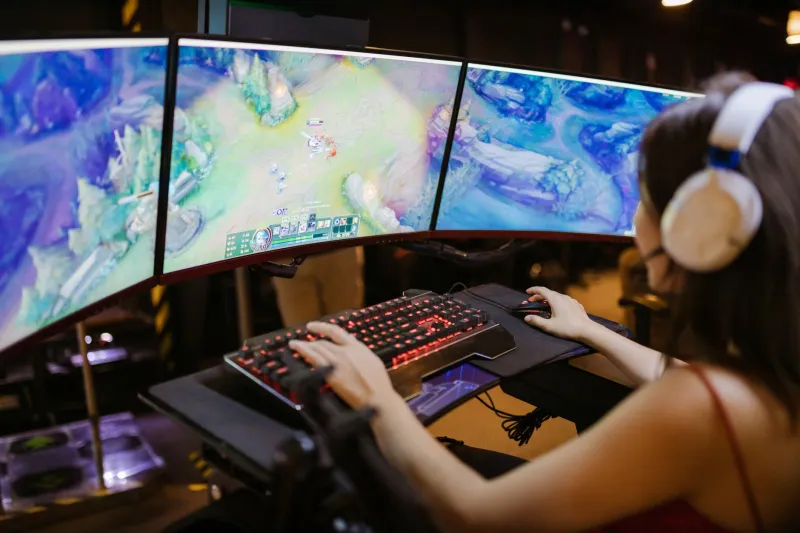
There was a time — not that long ago, honestly — when a woman walking up to an arcade cabinet or mentioning she'd been grinding ranked matches all weekend was met with suspicion before she got a single word of respect. The phrase 'fake gamer girl' wasn't just a meme. It was a weapon, and a lot of people used it freely.
That era is done. Not fading. Not evolving. Done.
What killed it wasn't one big moment or one viral clapback. It was a slow, sustained accumulation of presence — women showing up in professional esports rosters, behind game development desks, in front of streaming cameras with hundreds of thousands of subscribers — until the skepticism didn't just look wrong. It looked embarrassing.
The Numbers That Changed the Conversation
Let's start with the data, because the data is brutal in the best possible way.
As of the most recent industry reports, women make up roughly 48 percent of gamers in the United States. Not mobile-only players. Not casual puzzle app users tossed in to inflate a stat. Gamers, across platforms, across genres. The Entertainment Software Association has been tracking this shift for years, and the trajectory has been consistent: the gap is essentially gone.
More telling than the raw percentage is where women are spending their time. Competitive shooters, MMORPGs, open-world RPGs, fighting games — these were the genres that gatekeepers used as their litmus test. 'Oh, you play games? Name every weapon in Dark Souls.' The assumption was that women only touched casual titles. The assumption was wrong, and the sales numbers proved it.
When games like Apex Legends, League of Legends, and Valorant started publishing demographic breakdowns of their player bases, the old narrative didn't have anywhere left to stand.
The Streamers Who Refused to Shrink
If the data cracked the foundation, streamers finished the demolition job.
Take someone like Hafu, who built a reputation as one of the most technically skilled Hearthstone and Teamfight Tactics players on the planet — not 'one of the best female players,' just one of the best players, full stop. Or Pokimane, who turned a genuine love of gaming into a multimedia career that most male streamers would trade everything for. These weren't novelty acts. They were proof of concept.
What's interesting is how many of these women talk about the early years. The skepticism wasn't subtle. Comments questioning whether they actually played the games they were streaming. Accusations that their followings were built on looks rather than skill. Coordinated harassment campaigns designed specifically to push them off platforms.
They didn't leave. They grew their channels, kept playing, kept winning, and eventually the audience that showed up to doubt them became the audience that stayed to watch. That's not a small thing. That's a cultural shift happening in real time, one stream at a time.
When the Industry Had to Listen
The gaming industry itself took longer to catch up than the community did, which is saying something.
For years, female characters in major titles were designed almost exclusively through a male gaze — armor that offered zero protection, storylines that centered their value around male protagonists, marketing that treated women players as an afterthought. The backlash to Gamergate in 2014 was ugly and well-documented, but what got less attention was the slow, grinding work that followed it.
Developers like Jade Raymond, Amy Hennig, and Corrinne Yu had been building games at the highest level for years before mainstream gaming culture really acknowledged them. When they started speaking publicly — about the industry's blind spots, about the design choices that alienated half the potential audience — publishers had a decision to make.
The smart ones listened. Not out of altruism, but because the math was impossible to ignore. If nearly half your players are women and your game design, marketing, and character representation signal that you don't care about them, you are actively leaving money on the table. The boardroom argument turned out to be the one that actually worked.
Titles like The Last of Us Part II, Horizon Zero Dawn, and Metroid Dread didn't just feature strong female protagonists — they sold extraordinarily well. The old excuse that 'female-led games don't move units' got quieter with every quarterly earnings report.
Esports Finally Has to Reckon With Its Own Ceiling
Professional esports is still the most contested ground. It's the space where the 'fake gamer girl' mythology retreated when it got pushed out of everywhere else, and it's where the last serious arguments about women in gaming tend to live.
But even here, things are moving. Organizations like Cloud9, TSM, and 100 Thieves have invested in women's divisions and all-female rosters not as charity projects but as genuine competitive ventures. The Valorant Game Changers program created a structured pathway for women to compete at high levels and proved that the talent pool existed — it had just never been properly cultivated.
Players like Hazel 'Hazel' Nolan and others coming up through these pipelines are reframing what a pro gamer looks like. Not by making a statement about gender. Just by playing well and winning matches.
The ceiling hasn't shattered yet. Mixed-gender competition at the absolute top tier of esports is still rare. But the conversation around why that is has fundamentally changed. It's no longer 'women can't compete at that level.' It's 'what structural changes need to happen to get there?' That's a different argument, and it's a more honest one.
What Actually Killed the Myth
Here's the thing about the 'fake gamer girl' accusation: it was never really about gaming knowledge or skill. It was about ownership. Who gets to claim this space. Who belongs here and who's just visiting.
What killed it was simple, sustained presence. Women didn't ask for permission to be part of gaming culture. They just kept showing up — in lobbies, on stages, behind cameras, in development studios — until their presence was undeniable and the gatekeeping looked not just wrong but genuinely ridiculous.
The myth didn't die because someone won a debate. It died because the culture moved on without it.
Gaming is bigger now than it has ever been, and it got bigger because more people joined it. The communities that tried to stay small and exclusive didn't win that fight. They just got left behind while everyone else leveled up.
For anyone still clinging to the idea that women in gaming are a trend or a marketing gimmick — look around. Check the leaderboards. Watch the streams. Read the credits.
They were never guests. They were always players.